
Introduction
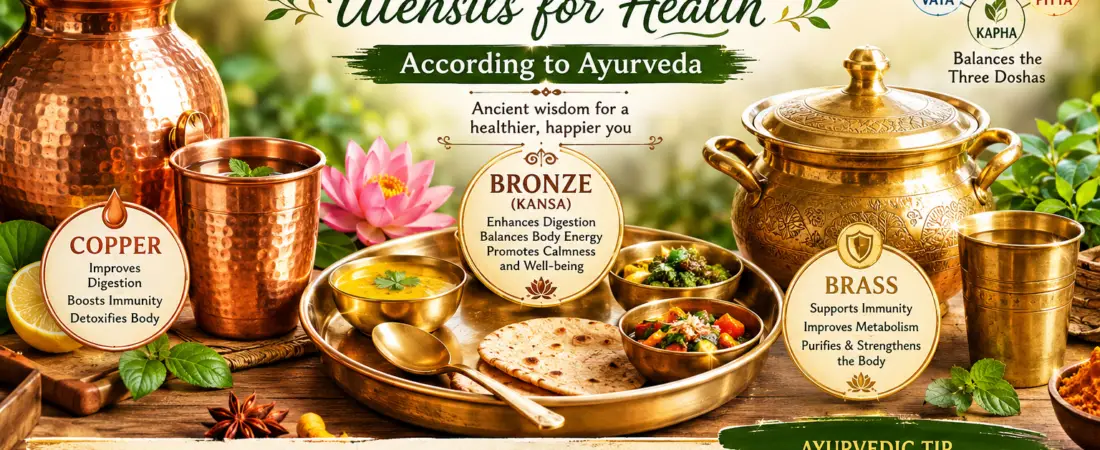
For thousands of years, Ayurveda, the ancient Indian system of holistic health, has emphasized the importance of not only what we eat but also how food is prepared, stored, and consumed. Traditional Indian households commonly used utensils made from copper, bronze (Kansa), and brass (Pital) long before modern stainless steel and non-stick cookware became popular. According to Ayurvedic principles, these metals possess unique properties that can positively influence health, digestion, immunity, and overall well-being. Today, as people seek natural and sustainable ways to improve their health, there is renewed interest in traditional metal utensils. This article explores the Ayurvedic significance of bronze, brass, and copper utensils and their potential health benefits.
Ayurveda and the Concept of Metal Utensils
Ayurveda views the human body as a balance of three doshas:
- Vata (Air and Space)
- Pitta (Fire and Water)
- Kapha (Earth and Water)
According to Ayurvedic texts, the materials used in cooking and eating can affect these doshas. Metals such as copper, bronze, and brass are believed to interact with food and water in ways that promote balance and enhance health. The practice of using these metals is not merely cultural; it is rooted in the belief that they possess medicinal and energetic qualities that support the body’s natural functions.
Health Benefits of Copper Utensils
1. Supports Digestive Health
Ayurveda recommends storing drinking water in copper vessels overnight. Copper-infused water, often called “Tamra Jal,” is believed to stimulate digestive enzymes and improve digestion.
Regular consumption of water stored in copper vessels may help:
- Improve metabolism
- Support nutrient absorption
- Reduce digestive discomfort
- Promote healthy bowel movements
2. Natural Antimicrobial Properties
Copper is known for its ability to inhibit the growth of harmful microorganisms. Traditional Ayurvedic wisdom recognized this property long before modern science confirmed copper’s antimicrobial effects. Water stored in copper vessels may contain fewer harmful bacteria compared to water stored in some other materials.
3. Supports Immunity
Ayurveda considers copper a trace mineral that helps maintain bodily functions and supports overall vitality. Proper copper intake may contribute to immune system health and cellular function.
4. Balances the Three Doshas
Copper is believed to help balance Vata, Pitta, and Kapha doshas when used appropriately. This balance is considered essential for maintaining optimal physical and mental health.
5. Antioxidant Properties
Copper plays a role in the body’s antioxidant defense systems. Ayurveda associates copper with rejuvenation and healthy aging.
Health Benefits of Bronze (Kansa) Utensils
What is Kansa?
Kansa, commonly referred to as Ayurvedic bronze, is typically an alloy of copper and tin. It has been highly valued in Ayurvedic traditions for centuries. Many Ayurvedic practitioners consider Kansa one of the healthiest metals for dining utensils.
1. Improves Digestion
Eating food from Kansa utensils is believed to stimulate digestive processes and support efficient digestion. Ayurveda teaches that healthy digestion is the foundation of overall wellness.
2. Maintains Food Quality
Bronze utensils do not react strongly with most cooked foods, helping preserve taste and nutritional value. This makes them suitable for serving a wide variety of meals.
3. Enhances Energy Balance
According to Ayurveda, Kansa possesses balancing energy that helps maintain harmony within the body. It is believed to support mental calmness and emotional stability.
4. Promotes Alkalinity
Traditional Ayurvedic beliefs suggest that Kansa can help reduce excessive acidity in the body and support a more balanced internal environment.
5. Beneficial for Nervous System Health
Kansa has long been associated with calming and grounding effects. Kansa massage tools are still widely used in Ayurvedic therapies to support relaxation and circulation.
Health Benefits of Brass (Pital) Utensils
Understanding Brass
Brass is an alloy primarily composed of copper and zinc. In traditional Indian households, brass utensils were commonly used for cooking, serving, and storing food.
1. Supports Immune Function
Zinc is an essential mineral involved in immune system function. Ayurveda values brass utensils because they combine the beneficial properties of copper and zinc.
2. Improves Metabolic Activity
Traditional Ayurvedic practices associate brass utensils with improved metabolism and better nutrient utilization.
3. Supports Blood Health
Copper and zinc are both important trace minerals involved in various physiological processes, including blood formation and cellular health.
4. Enhances Food Quality
Brass utensils are known for retaining heat effectively, which can help maintain food temperature during serving.
5. Traditional Detoxification Benefits
Ayurveda considers brass beneficial for supporting the body’s natural cleansing and detoxification processes when used correctly.
Ayurvedic Guidelines for Using Metal Utensils
Copper Utensils
Recommended for:
- Storing drinking water
- Drinking water first thing in the morning
Avoid:
- Storing acidic liquids such as lemon juice, vinegar, or tamarind-based preparations for long periods
Bronze (Kansa) Utensils
Recommended for:
- Eating meals
- Serving cooked food
- Daily dining use
Considered one of the safest and most balanced traditional metals for regular use.
Brass Utensils
Recommended for:
- Cooking certain foods
- Serving meals
- Storing dry ingredients
Avoid:
- Keeping highly acidic foods in brass containers for extended periods
Scientific Perspective
Modern scientific research supports some traditional observations regarding copper’s antimicrobial properties and the importance of trace minerals such as copper and zinc for human health. However, Ayurveda’s broader claims regarding energy balance, dosha regulation, and subtle health effects are based on traditional knowledge systems rather than modern clinical evidence. It is important to use these utensils responsibly. Excessive exposure to metals is not beneficial, and utensils should be properly maintained and cleaned according to manufacturer recommendations.
Why Traditional Metal Utensils Are Making a Comeback
As concerns grow about synthetic coatings, plastic containers, and environmental sustainability, many people are returning to traditional cookware and dining ware. Bronze, brass, and copper utensils offer several advantages:
- Eco-friendly and sustainable
- Durable and long-lasting
- Deeply rooted in Ayurvedic tradition
- Naturally beautiful and elegant
- Potential health-supporting properties
Their growing popularity reflects a broader movement toward natural living and holistic wellness.
Conclusion
Ayurveda has long recognized the importance of copper, bronze (Kansa), and brass utensils in promoting health and well-being. Copper is valued for water storage and digestive support, Kansa is revered for balanced dining and digestive health, and brass is appreciated for its combination of copper and zinc-related benefits. While modern science continues to investigate many traditional claims, these metals remain an important part of India’s wellness heritage. Incorporating high-quality traditional utensils into daily life can be a meaningful way to reconnect with Ayurvedic wisdom while embracing sustainable and mindful living. In Ayurveda, every aspect of daily life influences health—and even the plate from which we eat can become a tool for wellness.
Nitin Panwar (Founder, LaxM Global Trade Pvt. Ltd.)
Share Your Feedback
We value your opinion. Tell us what you think about this article.